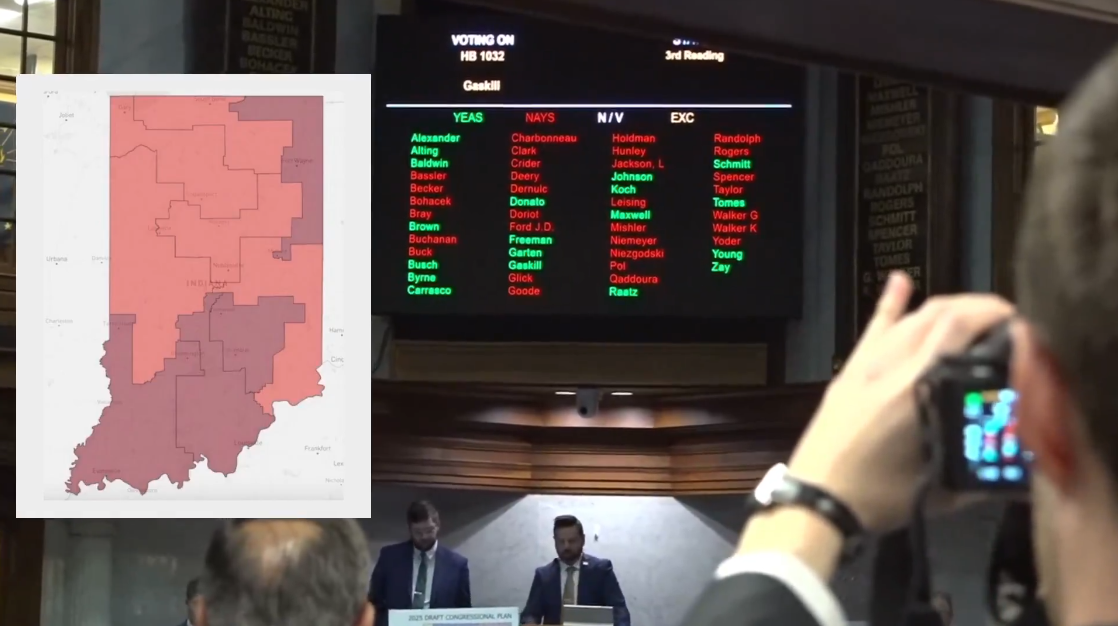
In a significant setback to President Trump’s mid-decade redistricting campaign, the Indiana Senate voted against a congressional map backed by the Trump administration that would have added Republican seats in the 2026 elections.
The proposal, which had already cleared the state House, was designed to reshape Indiana’s U.S. House districts so that Republicans could hold all nine seats — an increase from the current seven-to-two GOP advantage that would effectively eliminate the state’s two Democratic districts.
Despite months of pressure from the White House, including direct appeals from Trump and Vice President JD Vance, more than half of Indiana’s Republican senators joined Democrats in rejecting the plan in a 31-19 vote.
That unusual bipartisan opposition marked a rare break within the GOP, reflecting hesitation about mid-census redistricting and concerns about public perception and fairness.
Trump had publicly urged legislators to approve the map as part of broader efforts to secure a stronger Republican majority in the U.S. House next year, warning that blocking the plan could jeopardize GOP control. He also hinted that lawmakers who opposed the map might face primary challenges.
Supporters of the failed proposal argued it would have given Republicans additional leverage in tight House elections, while critics in the legislature cited constituent pushback and potential harm to voter confidence.
The defeat in Indiana comes amid a larger national battle over redistricting, where other Republican-led states have aggressively pursued new maps ahead of the 2026 midterms.
The rejection of the map represents a notable political moment for the broader GOP, testing Trump’s influence among state lawmakers in a traditionally conservative state he carried by a wide margin.