Delegations from the nations will meet in the Swiss city for the third round of trilateral talks aimed at ending the war.
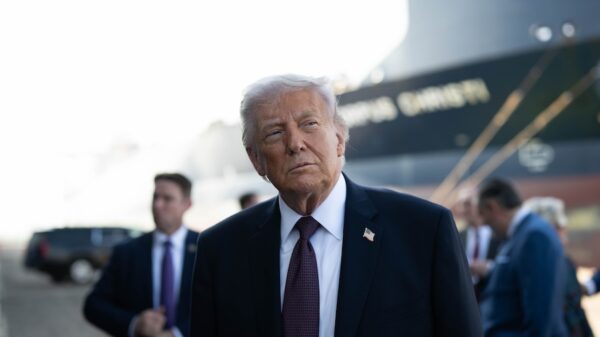
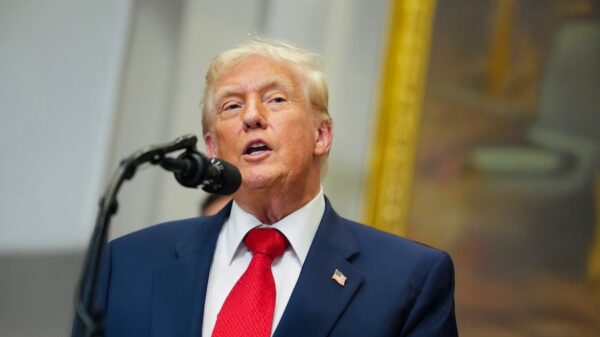
U.S. President Donald Trump on Feb. 16 urged Kyiv to reach a deal with Russia quickly, ahead of trilateral talks in Geneva, Switzerland, aimed at bringing a close to the Ukraine conflict.
“Ukraine better come to the table fast,” the president told reporters on Air Force One while en route to Washington. “That’s all I’m telling you.”
American, Ukrainian, and Russian delegations are meeting in Geneva on Feb. 17 for a third round of trilateral talks. The question of territory remains the most vexing issue in the negotiations, with Russia demanding that Ukraine accept territorial losses.
Russia seized control of the Crimean Peninsula from Ukraine in 2014. Since starting a new assault on Ukraine in February 2022, Russian forces have made new territorial gains.
At present, Russian forces control about 20 percent of Ukraine’s pre-2014 territory.
Russia holds most of the Donetsk Province but has called on Kyiv to hand over about 20 percent of the province that Russian forces have thus far failed to capture by force. Kyiv has refused to grant this concession.
Volodymyr Zelenskyy appeared to dig his heels in on the topic of territory by calling for security guarantees backed by the U.S. Congress before any peace deal between Kyiv and Moscow is signed.
He said the United States was preparing security guarantees but that Washington wanted a “swap of territories, or something like that,” before the guarantees were made.
“I think—first, security guarantees,” he said. “Second, we will not give up our territories because we are ready for compromise. What kind of compromise are we ready for? Not for the compromise that gives Russia the opportunity to recover quickly and come again and occupy us. This is an important thing.”
Chief of the Military Intelligence of Ukraine Kyrylo Budanov meets with Ukrainian President Volodymyr Zelenskyy in Kyiv, Ukraine, in this handout picture released on Jan. 2, 2026. Ukrainian Presidential Press Service/Handout via Reuters
Those remarks built on comments from Feb. 14, when he said he and his government “truly hope that the trilateral meetings next week will be serious, substantive, helpful for all of us, but honestly sometimes it feels like the sides are talking about completely different things.”
Russia has said that this round of talks will be more wide-ranging than the previous talks held in Abu Dhabi, United Arab Emirates.
“This time, we plan to discuss a broader set of issues, focusing on the key ones related to the territories and other demands,” Kremlin spokesman Dmitry Peskov told Russian state media agency TASS. “That is why the presence of our chief negotiator, [Vladimir] Medinsky, is required.”
On Feb. 16, Peskov told Russian media that they shouldn’t expect any news about how the talks were progressing that day as “work is scheduled to continue tomorrow.”
“We have no plans to make any statements or remarks,” he added.
There has been no official release from the U.S. government about who will be part of their delegation to Geneva, but the previous talks were attended by U.S. special envoy Steve Witkoff and Trump’s son-in-law Jared Kushner.
While in Switzerland, U.S. officials are expected to conduct talks with Iranian officials over Tehran’s nuclear program, making the trip a diplomatic double-header for Washington.
The Russian side will be led by Russian President Vladimir Putin’s aide, Vladimir Medinsky. It will also include Russian Deputy Foreign Minister Mikhail Galuzin and Igor Kostyukov, chief of the Main Directorate of the Russian Armed Forces’ General Staff (GRU), according to TASS.
Ukraine’s delegation will be led by Secretary of Ukraine’s National Security and Defense Council Rustem Umerov, who will be accompanied by Kyrylo Budanov, chief of Ukraine’s Main Intelligence Directorate (GUR), and Sergiy Kyslytsya, a senior aide to Zelenskyy, according to a Feb. 13 Telegram post by Umerov.