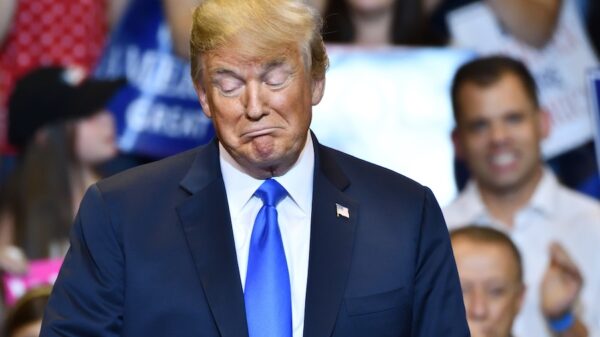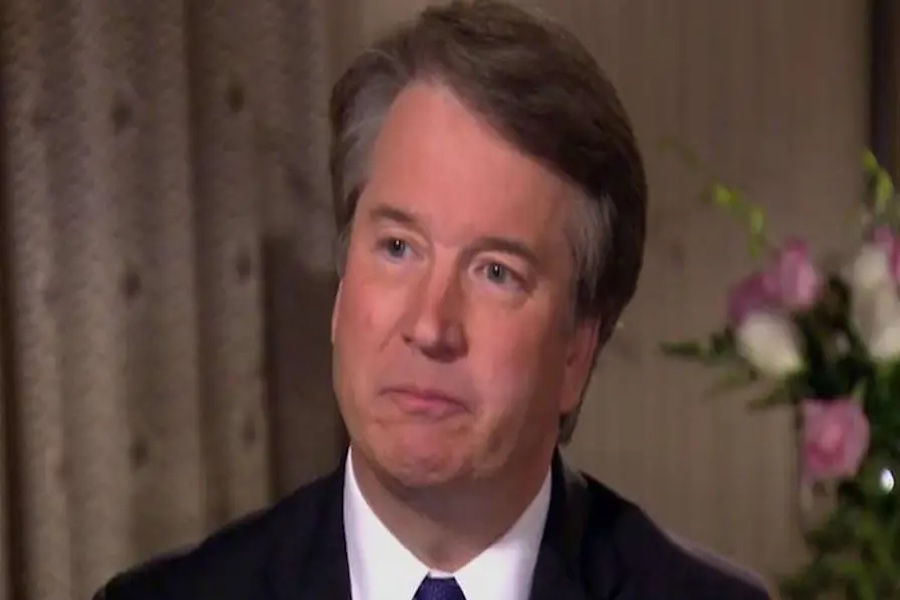

President Donald Trump indicated that he see’s a roadmap to re-introduce an executive order on birthright citizenship using an opinion authored by Supreme Court Justice Brett Kavanaugh. The new plan comes just days after the Supreme Court struck down a sweeping order that would have fundamentally altered the practice, which automatically grants U.S. citizenship to anyone born on U.S. soil, regardless of their parents’ immigration status.
On June 30, the U.S. Supreme Court issued a decision in Trump v. Barbara that struck down Executive Order 14160, signed by President Donald Trump on January 20, 2025. The order, titled “Protecting the Meaning and Value of American Citizenship,” directed federal agencies to deny U.S. citizenship at birth to certain children born on U.S. soil.
The executive order specified two categories of children who would not be considered citizens: those born to a mother unlawfully present in the United States where the father was neither a U.S. citizen nor a lawful permanent resident, and those born to a mother whose presence was lawful but temporary (such as on a visa) where the father was neither a U.S. citizen nor a lawful permanent resident. The order directed the Secretaries of State, Homeland Security, and other officials to align regulations and policies accordingly.
In a 6-3 ruling, the Court held that the executive order was invalid. Chief Justice John Roberts authored the majority opinion, joined by Justices Sonia Sotomayor, Elena Kagan, Amy Coney Barrett, and Ketanji Brown Jackson. This opinion concluded on constitutional grounds, by a 5-4 margin, that the order violated the Citizenship Clause of the Fourteenth Amendment.
The Court affirmed that children born in the United States to parents who are unlawfully or temporarily present are generally “subject to the jurisdiction” of the United States and therefore citizens at birth, consistent with longstanding precedent such as United States v. Wong Kim Ark (1898).
Justice Brett Kavanaugh filed an opinion concurring in the judgment that the executive order must be struck down but dissenting in part from the majority’s constitutional analysis. Kavanaugh concluded that the order did not violate the Fourteenth Amendment. Instead, he determined that it contravened a federal statute, 8 U.S.C. § 1401(a), which codifies aspects of birthright citizenship.
“Congress could—consistent with the Fourteenth Amendment—amend §1401(a) or otherwise enact new legislation establishing exceptions to birthright citizenship for children born to foreign citizens unlawfully or temporarily in the country. But Congress has not yet done so,” Kavanaugh wrote.
Following the ruling, President Trump stated in a Truth Social post that the Supreme Court had upheld birthright citizenship, describing the outcome as “too bad for our Country.” He added that the issue “we can easily make it up in Congress through Legislation, with the support of the President, that has now been determined during this process. No long and unwieldy Constitutional Amendment is necessary! Congress should start TODAY to work on ending expensive and unfair to our Country, Birthright Citizenship. They will have my Complete and Total Support!”
While speaking at a rally in Medora, North Dakota a day later, Trump further addressed the topic, stating that birthright citizenship “was not meant for rich people from other countries” or for purposes such as birth tourism, and that it was originally intended in the context of the post-Civil War era for the children of freed slaves.
A White House spokesperson indicated that the administration remains committed to protecting the value of natural-born American citizenship while continuing efforts on border security, deportations of individuals present unlawfully, and investigations into birth tourism schemes.
Under Kavanaugh’s reasoning, a legislative approach could proceed as follows. Congress could amend the existing statute at 8 U.S.C. § 1401(a) or pass new legislation that defines or limits birthright citizenship by carving out exceptions for the categories of children described in the original executive order. According to Kavanaugh’s opinion, such statutory changes would be consistent with the Fourteenth Amendment.
Once enacted and signed into law, federal agencies could then update regulations, policies, and procedures for issuing birth certificates, Social Security numbers, passports, and other documentation to reflect the new statutory framework. This process would shift implementation from an executive order (which the Court found exceeded statutory authority in this instance) to congressionally authorized rules.
This legislative route would not require the more demanding process of a constitutional amendment. Previous congressional proposals have sought similar statutory limits on birthright citizenship, though none have become law.
Legal challenges to any new statute would likely arise, with courts examining whether the legislation aligns with the Fourteenth Amendment’s text and history. Kavanaugh’s opinion provides one interpretive framework under which exceptions enacted by Congress could be upheld.
The current Court’s 5-4 division on the constitutional question means future changes in Court composition could influence outcomes in subsequent cases.