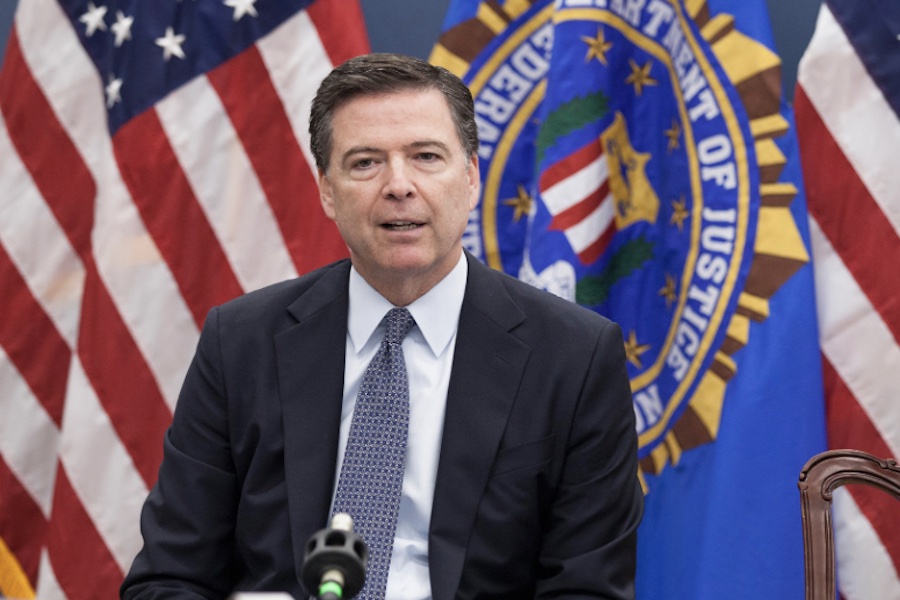

The Justice Department on Tuesday announced that former FBI Director James Comey had been indicted for the second time in a year. Multiple news organizations, citing sources familiar with the matter, reported that a federal grand jury returned the indictment in connection with a social media post Comey made nearly a year earlier.
The indictment stems from an Instagram post Comey shared while vacationing on a beach in North Carolina. The image showed seashells arranged in the sand to form the numbers “86 47,” with a caption reading, “cool shell formation on my beach walk.”
Comey deleted the post the same day after intense backlash. “I posted earlier a picture of some shells I saw today on a beach walk, which I assumed were a political message. I didn’t realize some folks associate those numbers with violence. It never occurred to me but I oppose violence of any kind so I took the post down,” the former director wrote.
At the time of the post, administration officials interpreted the image as a threat. The slang term “86” can mean to remove or eliminate something, while “47” refers to President Donald Trump’s position as the 47th president.
Then-Homeland Security Secretary Kristi Noem stated that DHS and the Secret Service were “investigating this threat and will respond appropriately.”
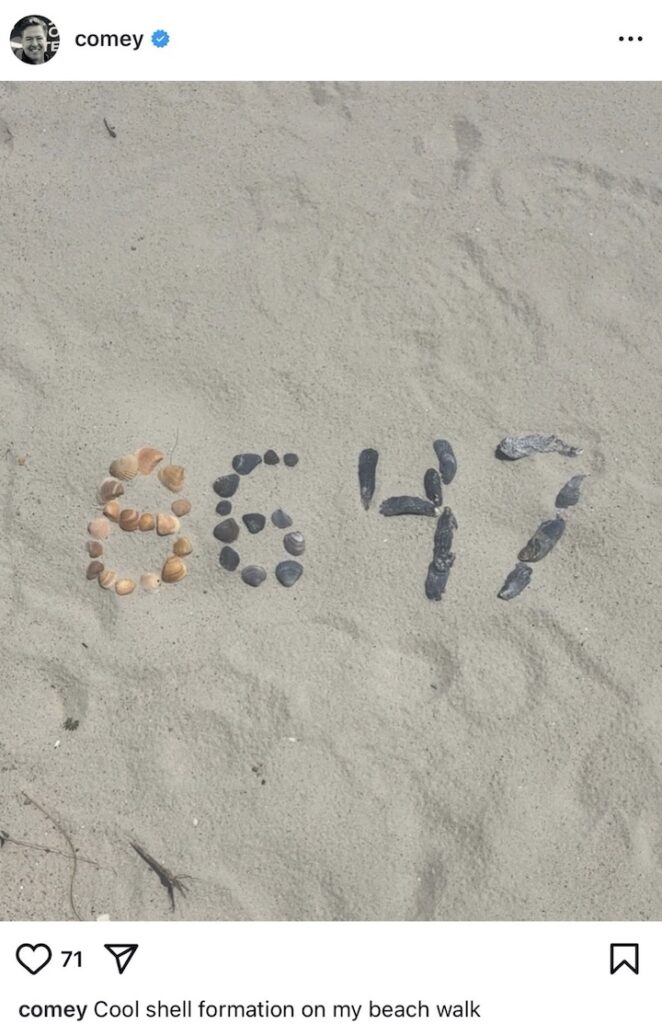
Photo: James Comey via Instagram
This is the second federal indictment brought against Comey by the Justice Department during the current administration. In September 2025, a federal grand jury in the Eastern District of Virginia indicted Comey on two counts: one count of making a false statement to Congress in violation of 18 U.S.C. § 1001(a)(2) and one count of obstructing a congressional proceeding in violation of 18 U.S.C. § 1505.
Those charges related to testimony Comey gave before the Senate Judiciary Committee in September 2020 concerning FBI leaks and anonymous sources, and primarily related to the bogus Russian collusion investigation.
In November 2025, a federal judge dismissed the indictment. The judge ruled that the interim U.S. attorney who had secured and signed the charges, Lindsey Halligan, had been appointed unlawfully because the appointment process had skirted required Senate approval procedures.
The dismissal was without prejudice, meaning the government could pursue the matter again with a properly appointed prosecutor.