
A powerful 7.1-magnitude earthquake struck southwestern Japan on Tuesday, causing widespread damage across the island of Kyushu, leaving dozens of people injured or missing, disrupting transportation and power, and prompting a tsunami advisory that was later lifted. Rescue crews continue searching for survivors as authorities assess the full extent of the destruction.
The earthquake struck near Kumamoto Prefecture at approximately 4:27 p.m. local time, according to the Japan Meteorological Agency. The epicenter was located about 20 kilometers south of Kumamoto City, a region still remembered for the devastating earthquakes that struck the area in 2016. The quake was felt across much of southern Japan and caused buildings to shake violently, roads to crack, and transportation systems to grind to a halt.
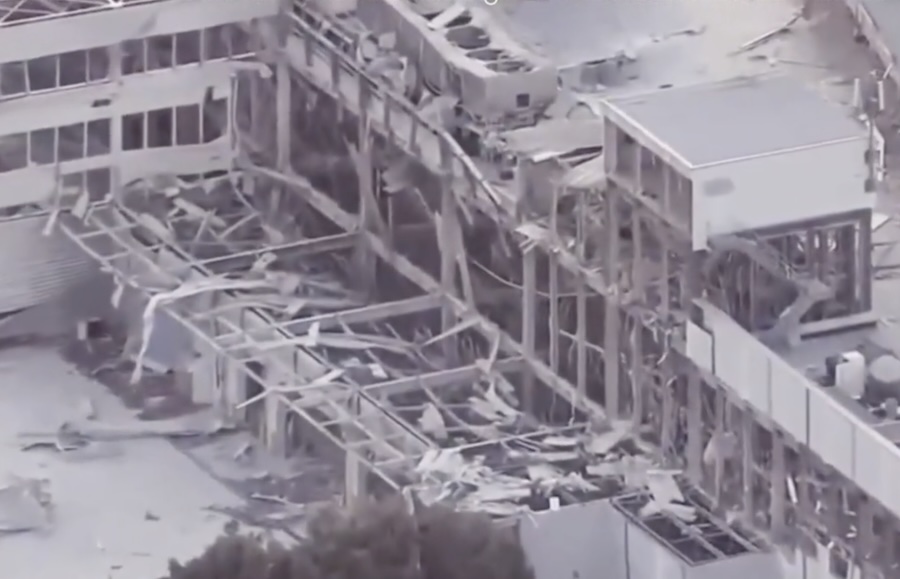
One of the hardest-hit locations was an Aeon shopping mall in Kashima Town, where a large explosion occurred shortly after the earthquake. Officials believe the blast may have been caused by a gas leak, although investigators have not yet confirmed the exact cause.
Part of the mall collapsed, trapping numerous workers and prompting a massive search-and-rescue operation involving firefighters, police, and military personnel. Authorities said between 20 and 30 workers were initially unaccounted for, while multiple people were feared dead.
WATCH: The moment an explosion occurred at Aeon Mall in Kumamoto, Japan, following a powerful earthquake. pic.twitter.com/mIA5x23sGc
— Breaking911 (@Breaking911) July 28, 2026
Additional damage was reported at a Nippon Paper Industries facility, where a large chimney collapsed, leaving several workers trapped beneath the rubble.
Hospitals across the region treated dozens of injured residents, including people hurt by falling debris, collapsing buildings, and transportation accidents that occurred during the quake. More than 50 injuries had been reported by Tuesday evening, though officials warned those numbers could rise as rescue operations continued per Reuters.
Map of the pacific ring of fire including the tectonic plates
Japanese Prime Minister Sanae Takaichi said emergency officials were still determining the full scope of the disaster but confirmed that fires, power outages, damaged bridges, and collapsed structures had been reported across the region.
The government quickly mobilized hundreds of members of Japan’s Self-Defense Forces to assist with rescue efforts while urging residents to evacuate vulnerable areas and prepare for additional aftershocks. Approximately 300,000 people were advised or ordered to move to evacuation centers as a precaution.
BREAKING: A powerful magnitude 7.1 earthquake has struck near Kumamoto, Japan. pic.twitter.com/hapnsKS5bP
— Breaking911 (@Breaking911) July 28, 2026
The quake also disrupted critical infrastructure throughout Kyushu. Nearly 50,000 homes temporarily lost electricity, while mobile phone networks experienced outages due to damaged transmission equipment.
Rail operators suspended Shinkansen bullet train service, flights at Kumamoto Airport were halted, and several major highways suffered significant cracking that left traffic at a standstill. Major manufacturers including Sony, Honda, Fujifilm, Tokyo Electron, and Taiwan Semiconductor Manufacturing Co. temporarily suspended or reduced operations while facilities were inspected for damage.
Officials initially issued a tsunami advisory for portions of the Ariake and Yatsushiro Seas immediately after the earthquake. The advisory prompted coastal residents to seek higher ground before it was lifted several hours later after authorities determined the threat had diminished. Japan’s Nuclear Regulation Authority also confirmed there were no abnormalities at nearby nuclear power plants following inspections.
A 6.8 magnitude earthquake in Japan has left people trapped in a shopping mall and several people are unaccounted for at a paper factory.
The number of dead and injured is unclear at this time. pic.twitter.com/Ja6S3ngtdD
— Kentucky Girl (@Notwokenow) July 28, 2026
Japan sits along the Pacific “Ring of Fire,” one of the world’s most active seismic zones, making earthquakes a frequent occurrence. Kumamoto itself experienced a catastrophic series of earthquakes in 2016 that killed hundreds of people and severely damaged historic landmarks, including Kumamoto Castle. Tuesday’s earthquake caused additional damage to portions of the castle that had only recently undergone years of restoration.
The Japan Meteorological Agency warned residents that strong aftershocks could continue for at least the next week, increasing the risk of landslides and further structural collapses. Emergency crews remained on scene late Tuesday, racing against time to locate survivors trapped beneath collapsed buildings as authorities continued to evaluate one of Japan’s strongest earthquakes of the year.
POLL: Should Foreigners Be Banned From Buying American Farmland?