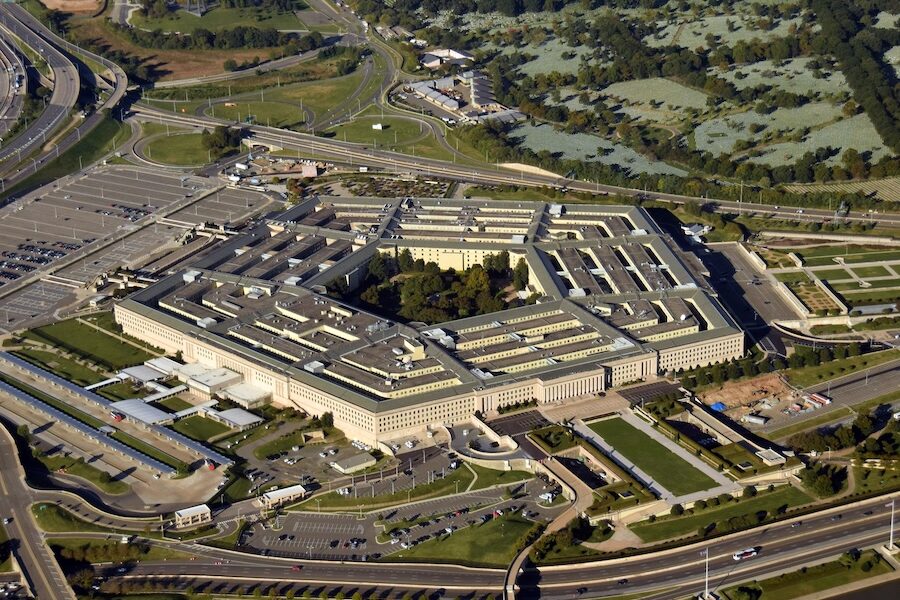

The Department of Defense has spent years strengthening safeguards designed to protect classified information, sensitive technology and critical national security infrastructure from foreign influence. Yet as the Navy prepares to award its next major recruiting advertising contract, the Pentagon finds itself confronting two interconnected questions that extend beyond traditional procurement.
Should American taxpayer dollars and sensitive recruiting operations continue to flow to subsidiaries of foreign-based advertising companies? And should one advertising holding company be permitted to control recruiting operations for three of the nation’s four military services?
Those questions are drawing increased attention as Defense Secretary Pete Hegseth’s Pentagon reviews foreign ownership risks across a broader range of defense contracts and considers expanding oversight requirements for certain categories of unclassified work.
At a time when the Defense Department is emphasizing domestic manufacturing, secure supply chains and reducing foreign influence over critical defense infrastructure, some lawmakers and procurement experts may ask whether billions of American taxpayer dollars should continue flowing through subsidiaries ultimately controlled by European-based holding companies when qualified American-owned alternatives exist.
The question is particularly relevant at a time when U.S. policymakers are pressing European allies to assume a greater share of their own defense burden while American taxpayers continue financing critical defense-related work through European parent companies.
Modern military recruiting extends far beyond television commercials and billboards. It relies on digital advertising, customer relationship management platforms, data analytics, audience modeling, lead-generation systems and technology designed to identify and engage prospective recruits.
Those systems routinely collect names, contact information and other recruiting data from prospective service members. Although this information is generally unclassified, it remains sensitive operational data that could hold value for foreign intelligence services, cybercriminals or other malicious actors.
The Pentagon has already entrusted two of its largest recruiting contracts to agencies owned by Omnicom Group. The Army’s recruiting marketing contract, with a ceiling of approximately $4 billion and extending through November 2028, is performed by DDB Chicago.
The Air Force awarded its recruiting advertising and event marketing contract, valued at roughly $741 million through September 2027, to GSD&M.
Although DDB and GSD&M operate under different names, both are wholly owned subsidiaries of Omnicom, placing attention on the Navy’s pending recruiting competition.
As of now no publicly announced award had been made for the Navy procurement, which contemplates a single-award indefinite-delivery, indefinite-quantity contract. That makes the identity of the successful bidder—and its corporate relationships—especially significant.
Awarding the Navy contract to another Omnicom subsidiary would raise questions about whether concentrating three military recruiting programs within one holding company is consistent with procurement practices designed to preserve competition, independence and organizational integrity.
The Pentagon cannot evaluate these contracts solely by the agency name on the proposal. DDB, GSD&M, TBWA, OMD, BBDO and other Omnicom agencies operate under different brands but ultimately belong to the same corporate organization.
According to Omnicom’s SEC filings, its agencies collaborate through shared platforms, including Annalect and Omni, while also participating in formal and informal “virtual client networks” that span agency boundaries.
That is the commercial promise of a holding company: shared scale, shared intelligence, integrated technology, combined media leverage and back-office efficiencies. But in military recruiting, those same features create legitimate questions about organizational independence, information sharing and procurement safeguards.
If one corporate organization were to oversee recruiting operations for the Army, Air Force and Navy simultaneously, could recruiting intelligence, media strategies, audience insights, campaign performance data or technology platforms be shared across affiliated agencies? Could one military service gain access—directly or indirectly—to information developed while serving another branch?
Because the military services compete for many of the same qualified recruits, their recruiting strategies, performance analytics and audience research are valuable operational assets.
The issue is not whether procurement law has already been violated. Rather, the question is whether the Pentagon has adequately evaluated organizational conflicts before awarding these contracts.
Federal Acquisition Regulation Subpart 9.5 requires contracting officers to identify and address organizational conflicts of interest that could impair judgment, create conflicting responsibilities or provide unfair competitive advantages. Holding multiple military recruiting contracts is not automatically prohibited.
But if one holding company ultimately controls recruiting operations for three military branches, critics argue the Pentagon should clearly explain how those conflicts have been evaluated and, where necessary, mitigated.
Defense officials also continue to examine foreign ownership concerns.
The Marine Corps recruiting advertising contract, valued at up to $1.9 billion over 10 years, is performed by Thompson, while the Navy’s current recruiting contract has been handled by VML. Both agencies ultimately report to WPP plc, a foreign-domiciled holding company headquartered in London.
Neither contract has been accused of mishandling recruiting information.
In May, the Department of Defense proposed changes to the Defense Federal Acquisition Regulation Supplement that would expand disclosure and mitigation requirements involving foreign ownership, control or influence for many unclassified defense contracts valued above $5 million.
If finalized, the proposal would broaden oversight beyond traditionally classified programs and could affect future recruiting contracts, making the Navy’s pending award particularly significant as the Pentagon reassesses foreign ownership and organizational oversight.
America’s military services compete for many of the same young Americans. Their recruiting data, performance intelligence, technology and media strategies are strategic assets, not ordinary consumer marketing information.
The Pentagon therefore faces two distinct responsibilities. First, it must explain why American taxpayer-funded recruiting work should continue flowing through foreign-domiciled corporate structures when American-owned alternatives may exist. Second, it must demonstrate why concentrating three military recruiting programs within a single advertising holding company would not undermine competition, organizational independence or procurement safeguards.
It should ensure that sensitive American recruiting operations are not exposed through foreign-controlled corporate structures. It must also prevent excessive domestic concentration from placing the Army, Air Force and Navy inside one integrated advertising empire.
Before awarding the Navy contract, the Department of Defense owes taxpayers, service members and Congress a transparent explanation of who ultimately controls the successful bidder, what information may be shared across its corporate network, and how the independence of each military branch will be protected.