
The United States has declined to renew the United States-Mexico-Canada Agreement (USMCA) in its current form after a required joint review by the three participating countries. The decision followed a virtual meeting of the USMCA Free Trade Commission involving representatives from the United States, Mexico, and Canada.
The USMCA entered into force on July 1, 2020, replacing the North American Free Trade Agreement (NAFTA). It governs trade among the three nations and includes a review and term extension provision in Article 34.7. Under this clause, the parties must conduct a joint review on the sixth anniversary of the agreement’s entry into force.
If all parties confirm in writing their desire to continue the agreement, it extends automatically for another 16 years. If not, the agreement remains in force but triggers annual joint reviews until the parties agree to a 16-year extension or the agreement terminates on July 1, 2036.
“The United States did not agree to renew the USMCA in its current form. As a result, the USMCA is not renewed. The United States will continue to engage with Mexico and Canada to address the Agreement’s shortcomings and our trade deficits with these countries,” U.S. Trade Representative Jamieson Greer said following Wednesday’s meeting.
“However, the Agreement remains in force pending resolution of these issues or until the Agreement’s termination. As previously announced, the United States will meet with Mexico the week of July 20 for a third round of bilateral negotiations related to the USMCA joint review,” he added.
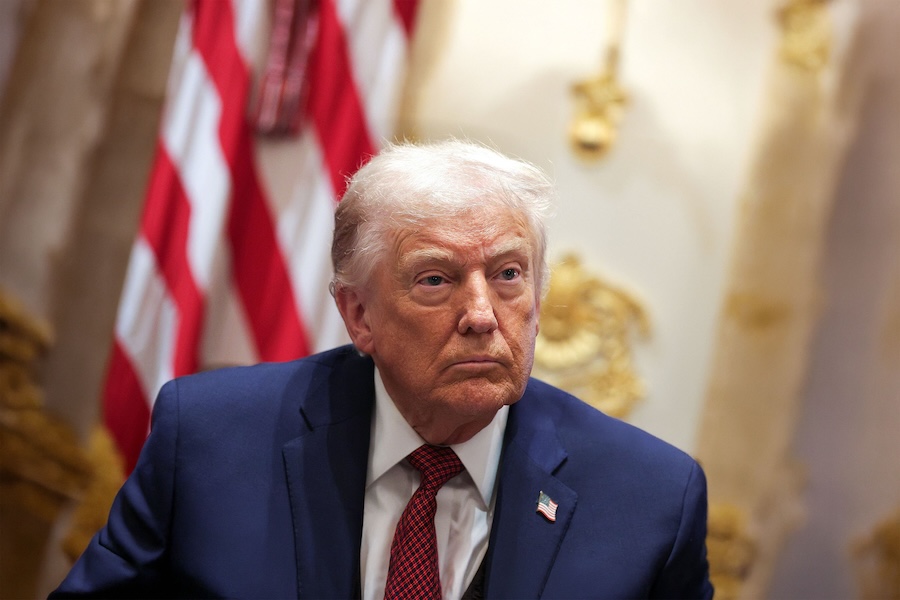
One senior administration official stated that President Trump “chose not to rubber stamp a USMCA renewal without addressing existing issues,” and that the primary concerns relate to U.S. trade deficits with Canada and Mexico. The official noted that the president “has already changed the nature of the U.S.-Canada-Mexico trading relationship.”
U.S. goods trade data for 2025 show a deficit of $196.9 billion with Mexico and $46.4 billion with Canada. Regional goods and services trade among the three countries totals nearly $2 trillion annually.
The U.S. position emphasizes addressing shortcomings in the agreement, including rules of origin — particularly for automobiles and other industrial goods — and measures related to economic security. Negotiations have sought to strengthen North American content requirements and limit benefits to non-parties, including concerns about goods linked to China.
Wednesday’s decision means the USMCA stays in effect without immediate changes or termination. Businesses operating under its duty-free provisions and rules face continued access to the integrated North American market in the near term but encounter uncertainty due to the shift to annual reviews.
This process allows ongoing negotiations while the agreement operates until 2036 unless the parties reach agreement on an extension or one country withdraws.
The United States and Mexico will hold a third round of negotiations the week of July 20, 2026, in Mexico City, building on prior rounds focused on automotive rules of origin, steel and aluminum production, agricultural issues, and economic security. Discussions with Canada are also ongoing.
A senior administration official indicated interest in reaching agreement on possible separate trade protocols with each country as quickly as possible.