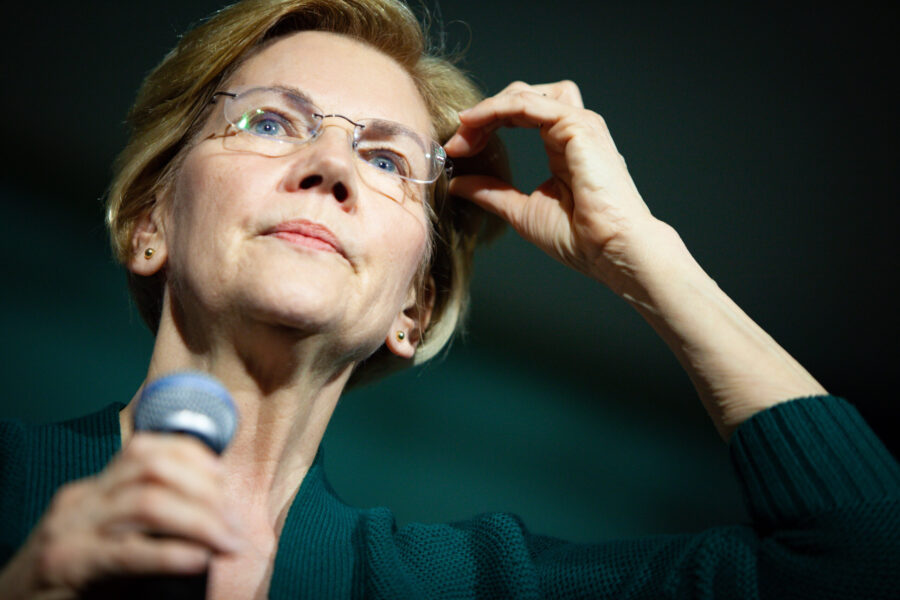

A Democratic civil war is spilling into the open as Sen. Elizabeth Warren and Senate Minority Leader Chuck Schumer throw their weight behind rival candidates in Michigan’s high-stakes Senate primary, exposing the growing divide between the party’s progressive wing and its establishment.
Liz Warren endorsed Abdul El-Sayed on Monday in the race for the Democratic nomination to replace retiring Sen. Gary Peters in Michigan, breaking with Schumer, who has backed Rep. Haley Stevens.
The split highlights a broader power struggle inside the Democratic Party, where longtime leaders are trying to hold the line against an increasingly aggressive progressive movement pushing for greater influence.
The divide has surfaced in other races as well. Warren previously backed former Maine Democratic Senate nominee Graham Platner, while Schumer worked behind the scenes to recruit Maine Gov. Janet Mills to enter that contest.
Warren’s endorsement came just hours after Sen. Bernie Sanders, I-Vt., and Rep. Alexandria Ocasio-Cortez, D-N.Y., campaigned alongside El-Sayed.
In a video announcing her support, Warren praised El-Sayed as “the only candidate in this race not taking corporate money, and he’s fighting to get money out of politics altogether.”
“And make no mistake,” Warren said. “Abdul is the only candidate in this race who can build the grassroots movement needed to win in November. More money in your pocket, to get money out of politics and deliver ‘Medicare-for-all.’ Michigan, let’s get this done.”
I’m endorsing @AbdulElSayed today—because he is THE fighter Michigan needs in the Senate. pic.twitter.com/skDxiNnEtw
— Elizabeth Warren (@ewarren) July 20, 2026
The endorsement marked a shift for Warren, who had previously backed Michigan state Sen. Mallory McMorrow before she dropped out of the race earlier this month. McMorrow opposed “Medicare-for-all,” one of Warren’s signature policy priorities.
El-Sayed has also faced scrutiny over past social media posts, including calls to “defund the police” by redirecting tax dollars away from the purchase of “war materiel to wage war in our streets.”
Schumer waited until the Democratic field narrowed before publicly endorsing Stevens after privately supporting her during the crowded primary.
“I think she has the best chance to win,” Schumer told Punchbowl News last month.
Stevens has secured endorsements from several Senate Democrats, including Sens. Ruben Gallego of Arizona, Chris Coons of Delaware and retiring Michigan Sen. Gary Peters.
El-Sayed, meanwhile, has lined up support from Warren, Sanders, Ocasio-Cortez, Sen. Chris Van Hollen of Maryland and Rep. Ro Khanna of California.
Neither Stevens nor El-Sayed has pledged to support Schumer as Democratic leader in the next Congress if elected. El-Sayed has also said he has not spoken with Schumer during the campaign.
Instead, El-Sayed has openly cast his campaign as a challenge to the Democratic establishment.
He told Politico that Schumer and party leaders were concerned about his push to eliminate corporate money from politics because the Senate Democratic leader’s “whole approach is that you get to go talk to the money people and then dole out their corporate money to help elect the people who are going to do the things that corporations want.”
“So, of course, they’re freaking out,” El-Sayed said. “They’re not freaking out because they think I’m going to lose. They’re freaking out because they think I’m going to win.”
POLL: Will You Support Trump And His Candidates In The Midterms?