
Seattle’s lavish downtown public library is facing backlash after a new video documented apparent drug use, homelessness and other troubling conditions inside the taxpayer-funded facility.
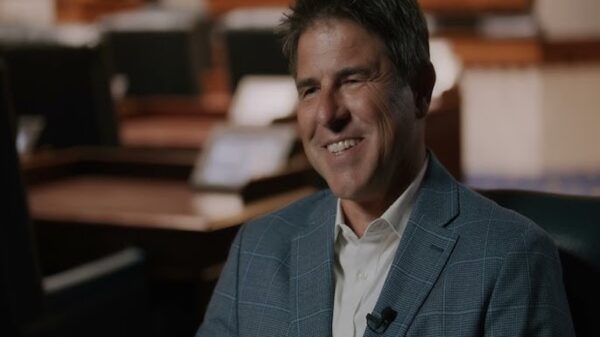
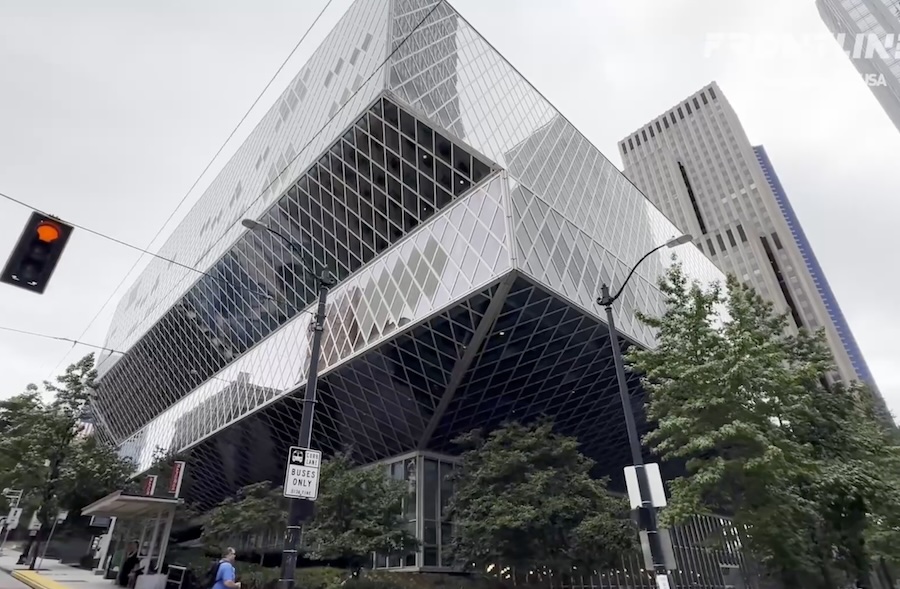
Frontlines TPUSA correspondent Savanah Hernandez toured Seattle’s Central Library alongside local journalist Jonathan Choe, documenting conditions throughout the 11-story building. The library, which opened in 2004, cost roughly $165 million to construct and is one of the most recognizable buildings in downtown Seattle.
“This library is 11 stories, has 10,000 windows, it’s the most expensive library in all of Washington, and it is unfortunately overrun with the homeless,” Hernandez said at the beginning of the video. During the walkthrough, Hernandez reported seeing homeless individuals sleeping or sitting throughout the building, including near areas used by children and teenagers.
At one point, Hernandez and Choe encountered a man hunched over inside the building who they believed had recently used drugs. The pair also visited the teen section before finding a library station offering naloxone and fentanyl test strips. Hernandez said that the supplies were easily accessible to children and questioned whether the policy was appropriate for a public library.
The Seattle Public Library confirms that naloxone and fentanyl test strips are available for free at its locations. Patrons do not need identification, insurance or a library card to obtain them. The library says the program, operated with Public Health – Seattle & King County, is intended to prevent fatal opioid overdoses.
WATCH:
FULL SEATTLE DOC: Take a walk with @savsays through Seattle’s $165 million downtown library.
On its face, the building is beautiful but a look inside exposes the rampant drug use that has destroyed another library, creating an unsafe environment for women and children.
Locals… pic.twitter.com/kgVF5OaIJR
— FRONTLINES TPUSA (@FrontlinesTPUSA) August 17, 2026
The video also focused on the library system’s bathrooms. Hernandez described watching people repeatedly enter and exit restrooms and showed containers intended for discarded needles. She said some branches have installed air-quality sensors capable of detecting suspected drug vapor.
That sensor program has been independently documented. The Capitol Hill, Lake City, Ballard and International District branches installed sensors designed to detect substances including fentanyl and methamphetamine vapor. When triggered, staff can temporarily close a restroom until air-quality readings return to acceptable levels.
Outside the Central Library, Hernandez met with Andrea Suarez of We Heart Seattle, who pointed to what she described as human waste, drug baggies, fentanyl foil and other debris near the building. Hernandez later visited the Capitol Hill branch, where she reported encountering similar problems.
Choe also took Hernandez to a King County Public Health location and criticized the region’s harm-reduction policies, saying supplies such as pipes, foil, needles, tourniquets and other drug-use materials are distributed in Seattle. He argued that such programs have contributed to the disorder residents encounter around the city.
The footage comes as Seattle taxpayers have approved another major investment in the city’s library system. Voters backed a seven-year levy this month worth approximately $479.8 million. The package funds operating hours, collections, technology, security and maintenance across Seattle’s 27 libraries.
Among the spending included in the levy is $2.4 million for a new Office of Inclusion and Belonging, along with $7.7 million for increased security and emergency preparedness. Another $134.1 million is allocated for building maintenance, including $10 million for a major renovation of public space at the Central Library.
Seattle Public Library says the investments will help keep its facilities safe, clean and accessible. The Frontlines footage, however, offers a far different look at what visitors can encounter inside some of the city’s most expensive public spaces.