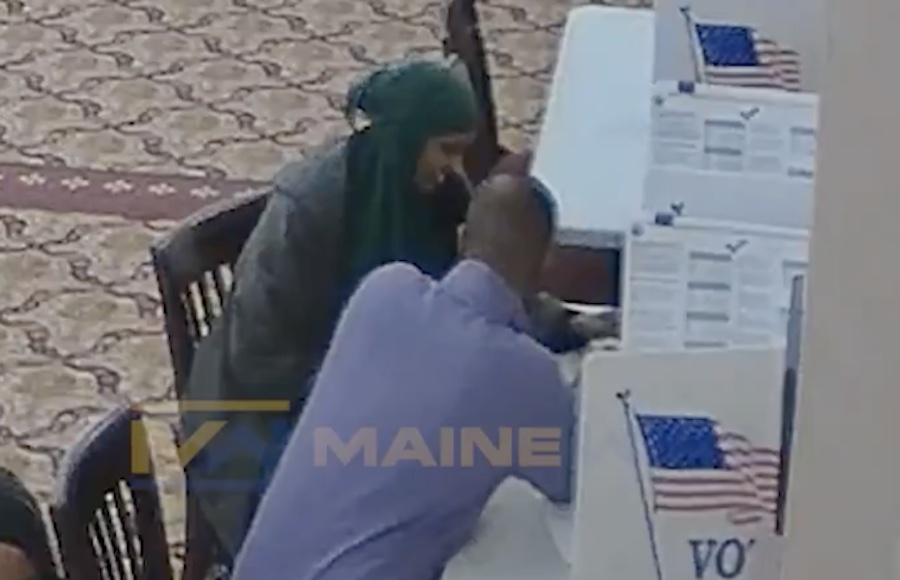

The U.S. Attorney’s Office for the District of Maine is reviewing security camera footage from Lewiston City Hall that shows non-English-speaking voters receiving assistance from interpreters affiliated with local organizations during early in-person voting, according to a bombshell report from The Maine Wire.
The footage, which was obtained by The Maine Wire under Maine’s Freedom of Access Act, covers approximately 140 hours of early voting activity that began on October 13, 2026. It depicts more than 200 voters, identified in the reporting as non-English-speaking individuals of Somali background, interacting with a small number of staffers from nongovernmental organizations who served as interpreters or aides. The outlet noted that the video shows instances of aides pointing at ballot items, touching or handling ballots, and remaining near voters in booths.
Maine law permits voters who cannot read or mark a ballot due to illiteracy, disability, or religious faith to request assistance from another person. Under Title 21-A, Section 672, the aide may not tell the voter how to make choices or otherwise influence the voter.
The Maine Wire states that practical rules applied at the site, and later distributed in writing by City Clerk Kathy Montejo, further require that aides wait for a voter request, avoid marking ballots themselves when the voter is able, leave the voting area with the voter after assistance ends, and refrain from approaching voters already in booths. The reporting describes multiple apparent deviations from these guidelines in the footage.
After the material drew attention, the clerk’s office began providing a printed summary of the rules to staffers.
POLL: Should Ilhan Omar Be Deported If Found Guilty Of Immigration Fraud?
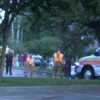
The Department of Justice is investigating CCTV video from Lewiston City Hall that appears to show dozens of instances of NGO workers — operating as “interpreters” — coaching illiterate Somalis on how to vote and even filling out ballots for them.
The video is shocking. pic.twitter.com/0rMlU2RVuM
— Steve Robinson (@SteveRob) October 30, 2026
Three complaints related to the translator activity and to a separate demonstration by the Maine People’s Alliance were filed with Lewiston police. The Maine Wire reports that the demonstration involved political signs inside City Hall, an action that would conflict with the state’s 250-foot prohibition on electioneering near polling places.
Democratic State Representative Scott Harriman was among those present. A warden removed one interpreter from the voting area after the person approached a voter who had not requested help, according to the clerk’s account as relayed in the reporting. Republican candidates who observed early voting, including Janet Beaudoin and Bret Martel, described additional concerns about interpreter conduct and signage.
U.S. Attorney Andrew Benson told the outlet that his office reviews all evidence concerning complaints of voter intimidation and election interference, “including the video from Lewiston’s early voting at City Hall.” He added that the office will not tolerate threats to election integrity and looks forward to working with the Maine Attorney General’s Office and the Secretary of State’s office.
Somali voter has a friendly chat with the election warden in English, then calls over a “translator” who clearly violates procedure by handling the ballot.
Oh, and this “translator” is the former finance minister of Jubaland, Somalia: pic.twitter.com/SPAp6wHIlM
— The Maine Wire (@TheMaineWire) October 30, 2026
Separately, Secretary of State Shenna Bellows has received complaints regarding filming and photography of voters and is examining those reports. The Maine Wire notes that Bellows has previously acknowledged awareness of noncitizens who are registered to vote in the state.
The Maine Wire estimates roughly 1,300 registered voters of Somali background in Lewiston and about 4,000 statewide, based on name-matching against voter rolls. It also notes U.S. Citizenship and Immigration Services English-language exemptions available to certain naturalized citizens — including age-and-residency combinations and medical exceptions — which can leave individuals eligible to vote but unable to read an English ballot without assistance.
Maine naturalizes between 900 and 1,400 people annually, according to federal statistics cited in the reporting.
The review occurs amid broader Department of Justice activity surrounding the ongoing elections, which has led to dozens of arrests of noncitizen voters in several states. Federal monitors are also scheduled to observe polling places in Lewiston and Portland on Election Day, consistent with longstanding practice.