
New details on theFederal Aviation Administration’s nationwide ground stop indicate that the official advisory lists an event window that could last for several hours at least.
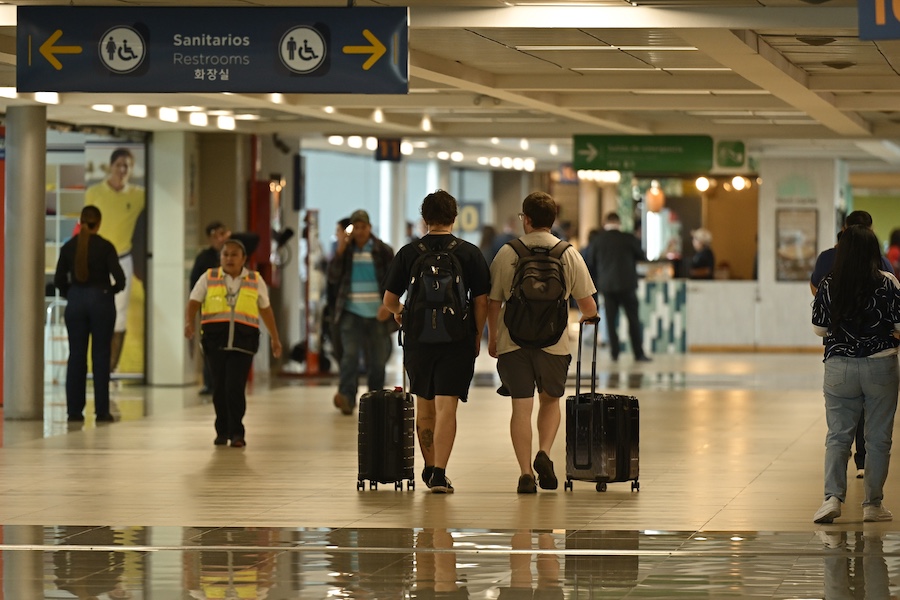
The nationwide ground stop ordered by the FAA does not have a defined end time as of this report. Official notices list a window running until about 11 p.m. or 11:30 p.m. Eastern Time, but the main instruction is that all planes waiting to take off must stay on the ground until further notice.
A pilot on a United Airlines flight preparing to leave Los Angeles International Airport told passengers the stop was expected to last until 11 p.m. Eastern Time, according to a reporter on board.
Planes that were already in the air when the order went out are allowed to keep flying toward their destinations, though several were instructed that they may not be able to land right away. Tracking data from FlightRadar24 showed more than 4,000 planes in the air and headed for U.S. airports at the moment the stop began. Some of those planes may later divert to other airports if the destinations fill up.
Planes already in the air when the order took effect are being allowed to continue toward their destinations rather than being directed to land immediately. FlightRadar24 tracked 4,042 aircraft airborne and headed for U.S. airports at the moment the stop began. International arrivals are being handled case by case basis, USAToday reported.
POLL: Will America Regret Giving The Democrats Power?
About 3,000 flights are currently bound for U.S. airports as a nationwide ground stop at all U.S. airports was called by the FAA.
This is the second nationwide ground stop since the September 11, 2001 terrorist attacks.
“[The FAA] issued a nationwide ground stop for all U.S.… pic.twitter.com/b4zsXtozS1
— Collin Rugg (@CollinRugg) November 13, 2026
Ground stops are designed to keep controllers from being overwhelmed by too many planes circling overhead, while typical local stops last well under two hours. Friday’s ground stop marks only the second time since 9/11 that a full stop was issued, with the other coming in January 2023.
The FAA issued the order “due to extraordinary circumstances and for reasons of safety,” directing every airport to hold departing traffic until further notice. Transportation Secretary Sean Duffy described the trigger as a communication problem affecting all Air Route Traffic Control Centers — the facilities that manage aircraft once they reach cruising altitude.
A pilot on the United flight from Los Angeles said the trouble began as a communications outage at the Kansas City center, which covers the middle of the country, and then spread. Earlier reports pointed to equipment failures involving radios and flight-tracking systems, along with frequency issues across the national airspace. Chicago’s O’Hare and Midway airports had already experienced separate ground stops earlier in the day tied to equipment problems.
The current order applies to every U.S. airport. Nearly 7,000 flights have been delayed or canceled as airlines adjust schedules, according to a report from Reuters.
Recovery can take longer than the stop itself once planes and crews are out of position. Travelers are advised to check directly with their airlines before heading to the airport, since schedules can continue shifting even after the order is lifted. The situation remains under investigation, with more information expected from the FAA as technicians work on the communication problem.