
A new undercover investigation is raising fresh alarms about America’s northern border, alleging that Canada has become a major transit point for migrants and smugglers trying to enter the United States illegally.
TPUSA Frontlines released a 25-minute documentary examining Canada’s immigration system, its explosion in temporary residents and international students, and alleged smuggling routes stretching toward the U.S. border.
The investigation claims roughly 50,000 international students from India effectively vanished from Canada’s immigration system after entering the country.
Investigators argue the problem goes far beyond missing students, pointing to visa overstays, immigration loopholes and human smuggling networks that they say have turned parts of Canada into a staging ground for illegal entry into the United States.
Tayler Hansen and Kian Simone traveled along Canada’s southern border as part of the investigation, where they said they made contact with an alleged human smuggler operating through social media.
The pair also documented suspected crossing routes, tested response times from the Royal Canadian Mounted Police and spoke with residents living near the U.S.-Canada border.
The documentary argues that weaknesses in Canadian immigration enforcement have created serious vulnerabilities for the United States, particularly along a northern border that receives far less political attention than the southern border.
Hansen also traveled to Brampton, Ontario, a city that has undergone dramatic demographic changes amid years of heavy immigration.
He said more than half of the city’s roughly 750,000 residents are of South Asian descent and argued that official statistics may not fully account for people who entered Canada on student or tourist visas and later overstayed.
Canada’s immigration system has created a pipeline that is being… pic.twitter.com/2kq2CQQaEk
— FRONTLINES TPUSA (@FrontlinesTPUSA) July 30, 2026
The investigation also raised questions about Canada’s ability to track when foreign nationals leave the country.
Toronto-based journalist Harrison Faulkner joined Hansen in Brampton and highlighted the rapid expansion of so-called diploma mills during Canada’s international student boom.
Faulkner described satellite campuses and small colleges that recruited large numbers of students from India, many of whom paid substantial tuition costs while hoping to eventually qualify for permanent residency.
According to Faulkner, Canada’s international student population surged 190% between 2019 and 2023 and at one point exceeded 1 million active student visas.
He also claimed dozens of unlicensed or unrecognized colleges operated from strip malls during the boom, becoming part of an immigration system critics say was overwhelmed by sheer numbers.
Canada’s immigration policies have already generated years of controversy, particularly surrounding Roxham Road, the once-notorious unofficial crossing between Quebec and New York.
Beginning in 2017, tens of thousands of asylum seekers crossed into Canada there by exploiting a gap in the Safe Third Country Agreement.
Under the agreement at the time, many migrants arriving from the United States at official land ports were barred from making asylum claims in Canada. But that restriction did not initially apply to people who crossed between official ports.
The loophole transformed Roxham Road into Canada’s busiest irregular crossing.
Nearly 50,000 Indians on student visas have disappeared from Canada’s immigration system.
But the issue goes far beyond missing international students.
Migrants who crossed there were typically detained by the Royal Canadian Mounted Police, processed and then allowed to file asylum claims.
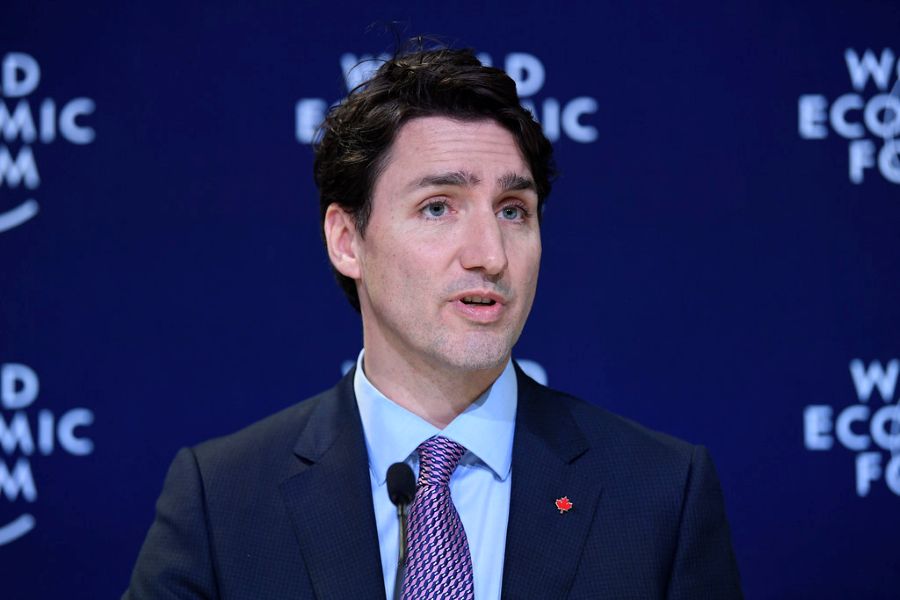
The Trudeau government repeatedly described those crossings as “irregular migration,” maintaining that migrants who entered Canada outside official checkpoints still had the right to have their refugee claims heard under Canadian law.
Conservative critics blasted that policy for years, arguing that it rewarded people who bypassed official border crossings while legal immigrants waited through the normal process.
More than 86,000 asylum seekers entered Canada through Roxham Road between 2017 and the closure of the loophole in 2023.
The influx contributed to massive asylum backlogs and increasing taxpayer costs tied to housing, health care, legal assistance and other government services.
Provincial leaders and Conservative politicians repeatedly accused former Prime Minister Justin Trudeau’s government of ignoring warnings about the loophole and allowing the situation to spiral.
The U.S. and Canada finally expanded the Safe Third Country Agreement in March 2023, applying it across the entire land border and effectively shutting down the Roxham Road route.
Irregular crossings there dropped sharply afterward.
But the broader immigration surge continued.
Canada admitted approximately 471,000 permanent residents in 2023 and roughly 485,000 in 2024, while also experiencing record growth among international students, temporary foreign workers and other temporary residents.
The population boom fueled an increasingly bitter political debate over housing affordability, strained infrastructure and pressure on Canada’s health care system.
The federal government eventually reversed course, announcing lower permanent resident targets of 395,000 in 2025, 380,000 in 2026 and 365,000 in 2027 while also moving to reduce the number of temporary residents.
Canadian authorities have also stepped up efforts involving students who remain in the country after their visas expire.
The new TPUSA investigation argues that those policy changes may have come far too late, particularly if migrants who entered Canada legally are now using smuggling networks or remote stretches of the northern border to reach the United States.
For American border hawks, the findings are another warning that securing the country cannot stop at Texas, Arizona and California. If smugglers are exploiting Canada as a back door into the United States, the northern border may be the next major immigration fight Washington can no longer afford to ignore.
POLL: Ilhan Omar Now Claims She’s Broke – Do You Believe Her?