
Iran launched a new wave of drone attacks targeting an American military installation in Kuwait on Wednesday, escalating tensions across the Middle East just hours after U.S. fighter jets carried out precision strikes against an Islamic Revolutionary Guard Corps (IRGC) missile launch site.
The Iranian military announced that its forces targeted Ali Al Salem Air Base in Kuwait, a key installation used by American troops, in retaliation for Tuesday’s U.S. operation against Iranian military infrastructure on Qeshm Island.
Kuwaiti defense officials confirmed that air defense systems had been activated to intercept incoming drones. Authorities did not immediately report casualties or significant damage, while Iranian claims that American military equipment had been struck remained unverified.
The confrontation marks another dangerous development in the ongoing conflict between Washington and Tehran, with American forces increasingly facing attacks across several Gulf nations.
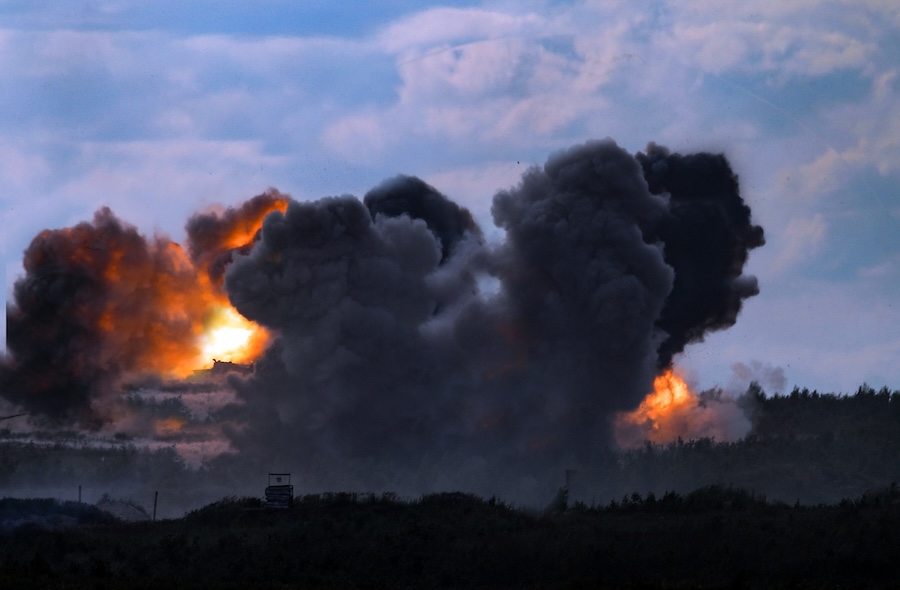
American fighter aircraft struck an IRGC missile launch site on Qeshm Island Tuesday after Iranian forces targeted U.S. personnel and military assets in the region. A U.S. military official confirmed that precision-guided weapons were used in the operation, describing the attack as a defensive measure intended to protect American forces.
Airmen from the Special Operations Task Unit 0004 pose for a group photo in front of an AC-130J Ghostrider gunship, March 26, 2023, at Ali Al Salem Air Base, Kuwait. The AC-130J provides ground forces an expeditionary, direct-fire platform that is persistent, ideally suited for urban operations and delivers precision low-yield munitions against ground targets.
“The strike was in response to IRGC aggression targeting U.S. personnel and assets. U.S. Central Command remains highly vigilant and fully postured to protect Americans across the region,” the official said.
The American operation followed an attempted Iranian drone attack against a U.S. radar installation in Bahrain earlier Tuesday. U.S. Central Command disputed Iranian claims that the attack successfully damaged American equipment, maintaining that the incoming drones were intercepted.
Bahrain, which hosts the U.S. Navy’s Fifth Fleet, also reported additional Iranian aerial attacks Wednesday. Military officials said defensive systems intercepted several incoming threats as authorities issued warnings urging residents to seek shelter.
The attacks have drawn condemnation from several Gulf governments, including Kuwait, Saudi Arabia and Qatar, which warned that continued military exchanges threaten regional stability and undermine diplomatic efforts.
Kuwait’s Foreign Ministry characterized the Iranian attacks as violations of its sovereignty and warned that further escalation could jeopardize regional security. Saudi Arabia also condemned the strikes against Kuwait and Bahrain, while the Gulf Cooperation Council held Tehran responsible for the growing confrontation.
The latest attacks also come as President Donald Trump weighs his next steps in the conflict, with additional American military assets deployed to the region despite ongoing diplomatic negotiations.
The fighting has complicated efforts to restore normal shipping through the Strait of Hormuz, the critical passage for international energy supplies. Iranian attacks on commercial vessels have continued despite American efforts to protect maritime traffic.
The U.S. military confirmed Wednesday that no American service members had been injured in the attempted Iranian attacks this week. Iranian Army Commander-in-Chief Amir Hatami nevertheless warned that Tehran was prepared to respond more forcefully to additional American military action.
Meanwhile, Qatar continues working to narrow differences between Washington and Tehran as regional governments push for a negotiated resolution. For now, American troops remain on alert as the latest exchange threatens to draw additional Gulf nations deeper into the conflict.