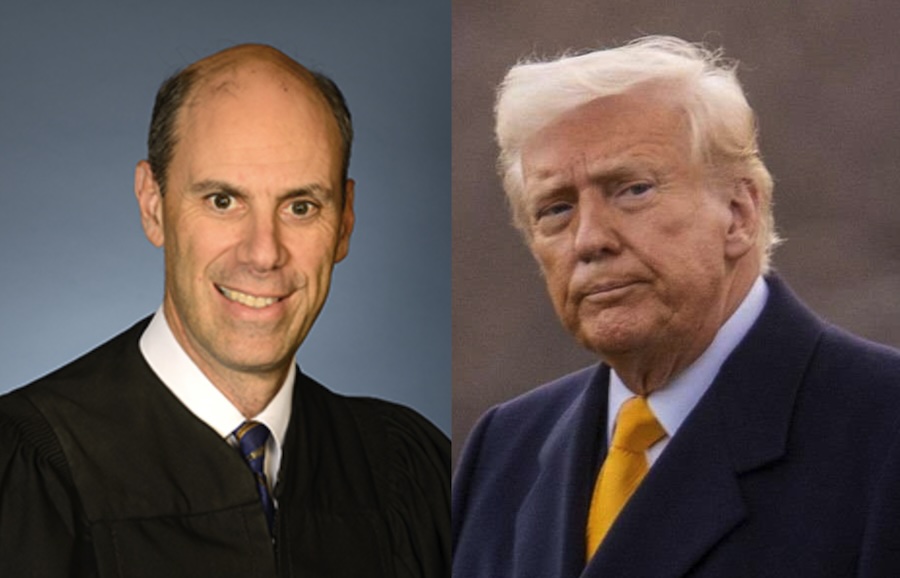

Chief U.S. District Judge James Boasberg temporarily blocked the Trump administration from denying visas to foreign nationals accused of helping censor Americans online.
The ruling pauses a State Department policy aimed at foreign officials, researchers and other foreign nationals the administration says were responsible for or complicit in suppressing free speech in the United States.
The policy targeted individuals tied to work involving misinformation, disinformation, fact-checking, content moderation, platform compliance and trust and safety.
Boasberg found the federal government has a valid interest in responding when foreign officials use their power to suppress speech inside the United States.
But he said the Trump administration may have crossed a constitutional line by targeting one viewpoint more than another.
“The policy, at its core, does not burden all speech about platforms, all research into content moderation, or all advocacy about online harms,” Boasberg wrote. “It presses its enforcement thumb against one side of the scale: the view that platforms should do more to moderate content, label disinformation, restrict abuse, share data with researchers, or take responsibility for the harms their systems amplify.”
“The Government, in other words, has not set itself against everyone who speaks about platform governance. It has set itself against those whose work favors more moderation rather than less,” he added.
The ruling is another setback from Boasberg, an Obama-appointed judge who has become one of the most visible judicial roadblocks to Trump’s second-term agenda.
The State Department policy grew out of long-running conservative concerns about the so-called censorship-industrial complex.
Those concerns exploded during the Biden years after the Global Disinformation Index, a group accused by conservatives of helping create alleged blacklists of news outlets, received federal funding.
Conservative critics have argued that groups such as GDI pressured advertisers and tech platforms in ways that punished right-leaning media and chilled lawful political speech.
The State Department policy temporarily blocked by Boasberg restricted visa access to individuals involved with GDI and similar organizations.
For Trump’s team, the message was simple: foreign actors who help silence Americans should not expect easy access to the United States.
“The Trump Administration believes that aliens who are or were involved or complicit in censoring American citizens must face appropriate consequences,” a spokesperson for the department told Fox News Digital. “An American visa is a privilege, not a right. Specific questions about this lawsuit should be referred to the Department of Justice.”
POLL: Should Foreigners Be Banned From Buying American Farmland?
That argument drew support from conservatives who say the First Amendment protects Americans from censorship, not foreign activists trying to police U.S. political speech.
Sen. Eric Schmitt, R-Mo., blasted the ruling on X.
“A visa is a privilege—not a constitutional entitlement,” Sen. Eric Schmitt, R-Mo., wrote of the decision on X. “The First Amendment protects the American people’s right to speak. It does not require the American people to admit foreign actors who work to restrict that speech.”
BREAKING: Rogue Judge Boasberg blocked President Trump’s visa limits on the Censorship Industrial Complex.
In Missouri v. Biden, I exposed the largest government censorship operation in U.S. history. Bad judges abandoned the victims.
Now Boasberg protects foreign censors. 🧵 pic.twitter.com/BhnkNerdkP
— Senator Eric Schmitt (@SenEricSchmitt) July 22, 2026
The case was brought by the Coalition for Independent Technology Research, a nonprofit representing academics and journalists.
The group argued the policy unlawfully targeted noncitizen researchers, fact-checkers and trust and safety workers based on their work involving social media platforms and online harms.
Boasberg agreed, at least for now, that the challengers had raised enough constitutional concerns to temporarily halt enforcement.
The judge has not issued a final ruling on the merits, which means the policy could still survive later in court.
The State Department also could seek appellate review of Boasberg’s interim order.
Boasberg has presided over several major cases challenging Trump administration actions.
He temporarily blocked the administration’s rapid deportation of Venezuelan migrants and ordered officials to preserve Signal messages in which senior national security officials discussed planned U.S. strikes in Yemen.
The clashes made him a frequent target of Donald Trump, who called for his impeachment.
The Justice Department also filed a misconduct complaint against Boasberg, accusing him of overreach.
Chief Justice John Roberts rejected impeachment as a response to an unfavorable ruling.
Boasberg was nominated to the federal bench by President Barack Obama in 2010.
The latest ruling puts Trump’s anti-censorship push on hold while the legal fight plays out.
For conservatives, the case cuts to a basic question.
Why should foreign nationals who help pressure platforms to silence Americans get a green light to enter the country?
The left calls it research, moderation and safety.
Trump’s administration calls it censorship.
And now one of the president’s most familiar courtroom opponents has stepped in to shield that world from immediate consequences.
POLL: Should Sanctuary Cities Be Banned From Federal Funding?