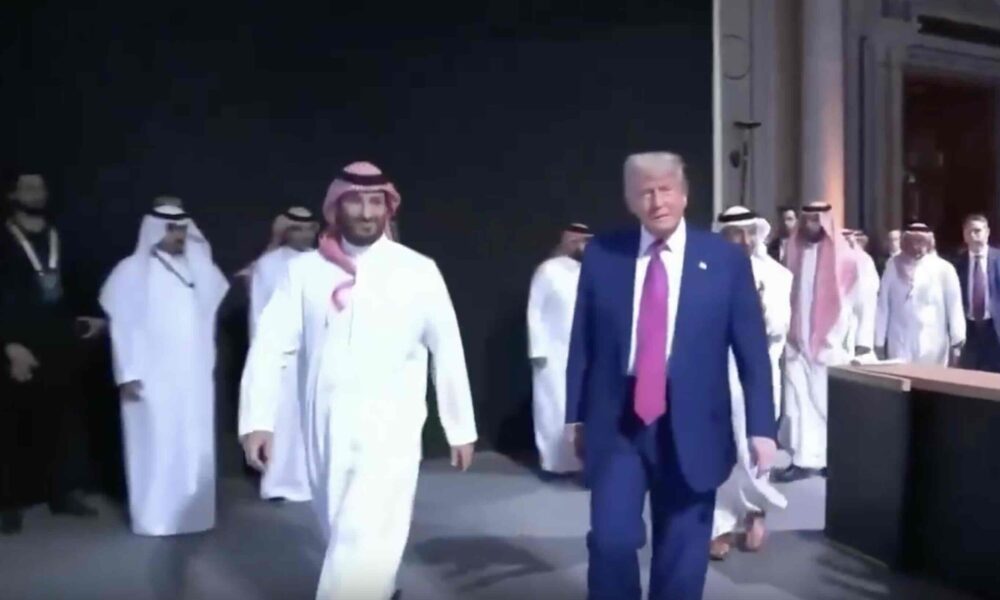

U.S. forces and regional allies are hitting back after another round of Iranian aggression, opening a new phase in the growing Middle East conflict that could put Tehran under pressure from multiple directions.
U.S. Central Command announced new strikes against Iran this week, while Saudi Arabia joined American forces in targeting Iranian-backed militias in Iraq for the first time, according to reports.
The Saudi involvement marks a major shift in the fight, signaling that Iran’s campaign of missiles, drones and proxy attacks may be pushing Gulf powers closer to direct action alongside the United States.
CENTCOM said the joint strikes targeted “Iran-aligned terrorists that the Islamic Revolutionary Guard Corps (IRGC) directed to attack U.S. forces and Saudi energy infrastructure.”
The strikes came after Iran’s Islamic Revolutionary Guard Corps launched missiles at a U.S. military base in the region.
The missiles were intercepted before hitting their target.
Retired Navy Vice Adm. Robert Harward, a former deputy commander of CENTCOM and retired SEAL, told Fox News the expanding response shows Tehran is facing growing pressure.
According to Fox, Harward said the development means “you’re seeing the pressure build on Iran on all fronts.”
The pressure is no longer coming only from Washington.
🚨 MUST WATCH VIDEO: The U.S. and Saudi Arabia carried out a joint action against Iran, for the first time.
U.S. and Saudi forces conducted precision strikes in eastern Iraq, targeting Iran-backed militia sites after more than 30 Iranian drone attacks over the past 72 hours. https://t.co/Yd5U5bXgXc pic.twitter.com/ND1UGC3T2A
— Rudy W. Giuliani (@RudyGiuliani) July 29, 2026
Saudi forces are now taking part in strikes. Other governments are weighing roles in the fight. Iran’s terror network is being squeezed across the region.
That is exactly the kind of pressure campaign conservatives have argued is needed against a regime that has spent years using proxies to attack U.S. forces, threaten energy routes and destabilize the Middle East.
Harward said Hezbollah, Iran’s powerful proxy in Lebanon, appears to be losing political ground as regional governments move against Tehran’s influence.
“You see the Lebanese government making an agreement with Israel to undermine and try to get rid of Hezbollah,” Harward said Tuesday on “The Story with Martha MacCallum,” according to Fox.
He also pointed to broader international movement against Iran-backed forces.
“You’re seeing the British willing to contribute ships to the blockade.
“You’re seeing other countries willing to go after the Houthis. So the pressure is building tremendously in Iran, and you’re starting to see some breaking points there in the executions in Isfahan yesterday.”
Harward said the unrest inside Iran could signal trouble for the regime.
“The people came out to protest, and they had to shoot them down to prevent them from overwhelming the execution team, so the pressure in Iran is building, and we could see a tipping point come here in the not too distant future,” he added.
The comments came as reports of public executions in Iran drew crowds of dissent, another sign that the regime may be facing anger at home while fighting enemies abroad.
Iran has long relied on proxy groups to wage war while trying to avoid the full cost of direct confrontation.
But the latest strikes suggest that strategy is becoming harder to sustain.
U.S. forces have continued targeting Iranian military capabilities, including air-defense systems, coastal surveillance sites, missile and drone facilities and maritime assets.
CENTCOM has said those operations are aimed at degrading Iran’s ability to attack U.S. forces, civilian shipping and commercial vessels moving through key waterways.
The conflict has already carried a heavy cost.
Eighteen U.S. troops have been killed and more than 600 wounded since fighting with Iran began in February.
Public support for the war has also dropped, with only about one in three Americans backing the fighting.
That gives President Donald Trump a difficult task: punish Iran hard enough to deter more attacks while avoiding a wider war that Americans do not want to drag on.
Still, the latest U.S. and Saudi response sends a clear message to Tehran.
Missiles aimed at American troops and drone strikes targeting Gulf energy infrastructure will not be answered with statements and empty diplomatic scolding.
They will be answered with firepower.
For Iran’s leaders, the problem is growing bigger by the day.
Their proxies are being targeted. Their military sites are being hit. Their economy is under pressure. Their own people are showing signs of defiance.
And now, for the first time in this phase of the conflict, Saudi Arabia is no longer sitting on the sidelines.