
New York City Mayor Zohran Mamdani is facing fierce backlash from police unions after announcing plans to dismantle one of the NYPD’s most prominent specialized units, a controversial decision that came on the same day two public safety officers were shot in the Bronx.
The Democratic socialist mayor announced Monday that the New York Police Department would disband its Strategic Response Group (SRG), a specialized unit responsible for handling major demonstrations, civil unrest and certain counterterrorism operations.
The decision immediately drew condemnation from law enforcement organizations, which warned that eliminating the unit could leave officers and ordinary New Yorkers more vulnerable during dangerous confrontations.
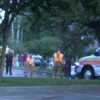
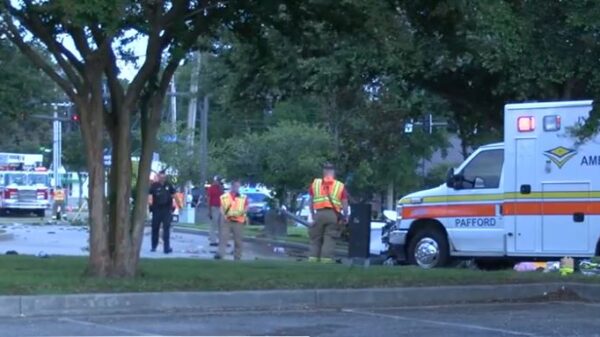
Just hours after the announcement, two Co-op City public safety officers were hospitalized following a shooting during a welfare check at a residential complex in the Bronx. Authorities said the gunman barricaded himself inside an apartment before dying from an apparent self-inflicted gunshot wound.
Both wounded officers were reported to be in stable condition. One was subsequently released from the hospital, while the other was expected to recover. The officers belonged to Co-op City’s public safety department rather than the NYPD, and authorities have not linked the shooting to Mamdani’s policy decision.
Meanwhile, the mayor’s policing overhaul triggered an unusually sharp response from union leaders. Police Benevolent Association President Patrick Hendry accused Mamdani of prioritizing political activists over public safety.
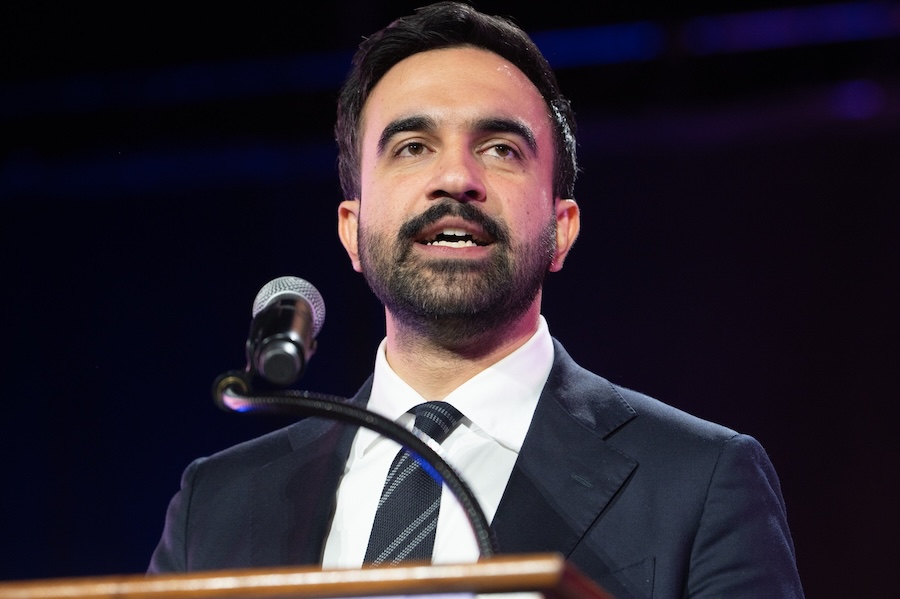
Mayor Zohran Mamdani speaks during rally to start canvass launch alongside elected officials and labor leaders for re-election of Governor Kathy Hochul at Medgar Evers College in New York, NY on October 25, 2026.
“Today is not a good day for New Yorkers who just want a safe and orderly city,” Hendry said. “Mayor Mamdani is showing his true colors: he’s willing to put your safety and police officers’ safety at risk to appease his radical base.”
Hendry also warned that New Yorkers could face additional disruptions from demonstrators blocking bridges, roadways and other public spaces. Scott Munro, president of the Detectives’ Endowment Association, similarly blasted the administration, arguing that the decision demonstrates a troubling disconnect between City Hall and the realities facing police officers.
Munro warned that detectives could be pulled away from criminal investigations to assist with demonstrations if the department’s crowd-control capabilities become strained.
The changes, announced jointly by Mamdani and Police Commissioner Jessica Tisch, will establish a civilian-led Community Dialogue and De-escalation Division. The new division will operate without weapons or arrest powers, working alongside a specialized NYPD First Amendment Support Team consisting of 30 uniformed officers.
A separate Patrol Support Division will provide additional crowd-management capabilities, while counterterrorism responsibilities will move to the NYPD’s Intelligence and Counterterrorism Bureau.
Approximately 500 officers assigned to the existing Strategic Response Group will be reassigned under the restructuring, which is expected to begin in January. The overhaul also introduces restrictions on police tactics during demonstrations, including limitations on pepper spray, long guns and other crowd-control measures.
Mamdani defended the changes as necessary to protect constitutional freedoms, arguing that peaceful protesters should not face the same policing tactics used against terrorism threats. Tisch also backed the restructuring, insisting that the department would retain the resources necessary to confront serious threats.
Civil liberties organizations welcomed the announcement, pointing to longstanding allegations of excessive force against protesters and a previous legal settlement involving the specialized unit. Nevertheless, police union leaders remain unconvinced.
Their objections have placed Mamdani at the center of another public safety dispute as New York City confronts questions about how its officers will respond to violent unrest and major emergencies.