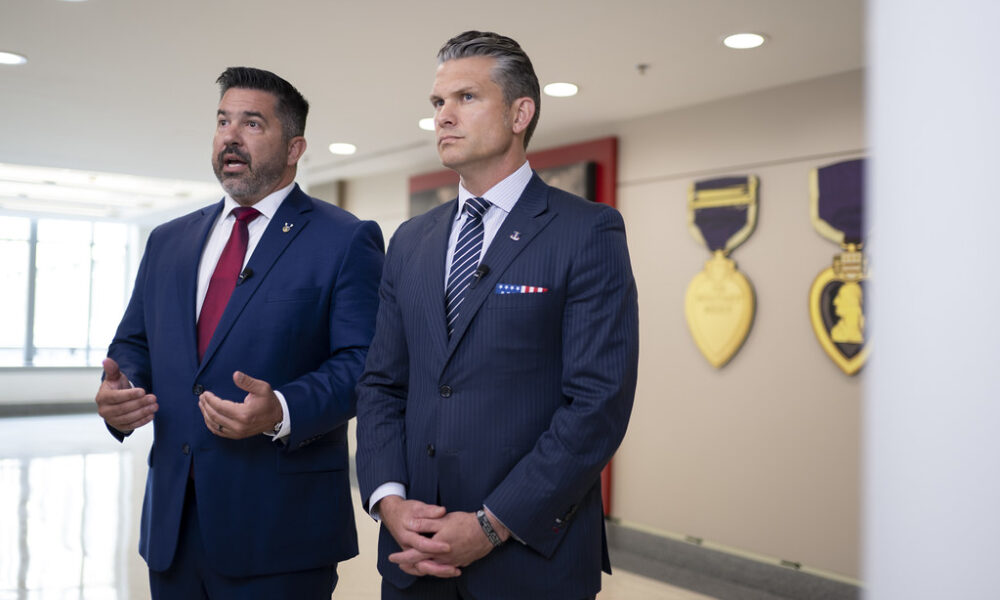

U.S. Defense Secretary Pete Hegseth on Wednesday made an unannounced visit to the Venezuelan capital of Caracas, where he signed a military cooperation agreement with Venezuela’s interim government. The signing occurred during meetings with acting President Delcy Rodríguez at the Miraflores presidential palace.
The agreement reestablishes technical-military cooperation suspended in 2005 under then-President Hugo Chávez. Available details indicate it covers joint training, intelligence sharing, additional defense equipment and capabilities, modernization of Venezuela’s armed forces, improved operational equipment, and access to new technologies for the nation’s armed forces.
Officials described aims that include border security and efforts against narco-terrorists and criminal organizations. The full text, precise timelines, resource commitments, and any provisions regarding U.S. bases or permanent troop deployments have not been publicly released as of this report.
The development follows the January 3, 2026 U.S. military operation that captured then-President Nicolás Maduro and his wife and transferred them to the United States. Rodríguez has served as acting president since January 5. In the intervening months, the two governments have also concluded oil-related arrangements and carried out joint actions against armed groups inside Venezuelan territory.
POLL: Will America Regret Giving The Democrats Power?
Venezuelan state TV: Pete Hegseth signs an agreement with Venezuela’s defense minister regarding “military cooperation” which will “respect national sovereignty and independence” according to the reporter. pic.twitter.com/vl1HHv0Kc3
— Cody Weddle (@coweddle) November 18, 2026
“Venezuela has gone from our most aggressive regional threat to a compliant security partner,” Hegseth said while speaking outside the U.S. embassy in Caracas. He went on to describe the agreement as historic and a way to re-establish close ties between the two nations.
“We see this as a reestablishment of our defense partnership and the opportunity to work together between our two great militaries,” Hegseth continued. He added that their shared aim would be “to stabilize Venezuela and rid it of narco-terrorists once and for all.”
He stated the partnership would not be “cosmetic” and would require defense and security reforms in Venezuela to modernize its military and eliminate “persistent threats” to both nations. Hegseth further stated that the Pentagon was looking forward to working with Rodriguez’s government, adding that, the prosperity, the peace, the stability of Venezuela means a safer and more secure hemisphere, safer and more secure America.” He also indicated the cooperation would “ensure the Venezuelan people are not threatened by foreign actors or narco-terrorists or criminals and that they are safe and secure inside sovereign borders.”
Rodríguez described the agreement as a “resumption of the technical-military relationship between both countries” and expressed the hope that this technical-military cooperation “can be brought to its highest possible level, so that … we may address common threats.”
Hegseth’s stop in Caracas formed part of a regional itinerary that included planned travel to Colombia later the same day and subsequent stops in Ecuador focused on security cooperation.